The Hype vs The Reality
You have seen the photos. Impossibly thin sandstone pillars rising out of clouds, connected by fragile stone bridges, wrapped in green vegetation. They look like something from another planet. James Cameron saw them too and used Zhangjiajie as direct visual inspiration for the floating Hallelujah Mountains in Avatar. In 2010, one pillar was officially renamed the "Avatar Hallelujah Mountain" to capitalize on the connection.
So does Zhangjiajie actually look like Avatar? The honest answer is: sometimes yes, and sometimes absolutely not. On a misty morning when clouds roll through the pillar forest and you catch a gap in the crowds, the resemblance is uncanny. The pillars genuinely seem to float when fog obscures their bases. It is one of the most surreal natural landscapes on Earth.
But on a clear day at noon with 500 people jostling for the same viewpoint photo, the spell breaks. The pillars are impressive but firmly planted. The paths are paved. There are handrails. A gift shop sells Avatar figurines. The magic of Zhangjiajie is real, but it is not always the ethereal, empty dreamscape that Instagram suggests.
What Actually Makes Zhangjiajie Special
Forget Avatar for a moment. Zhangjiajie's sandstone pillar forest is genuinely one of the most unusual geological formations on the planet. Over 3,000 quartzite sandstone pillars, some over 200 meters tall, were carved over millions of years by water erosion and gravity. The combination of vertical pillars, dense subtropical vegetation, and frequent cloud cover creates landscapes that exist nowhere else on Earth.
The scale is what hits you first. Photos flatten Zhangjiajie into a pretty backdrop. In person, looking down from the Yuanjiajie plateau at hundreds of pillars stretching to the horizon, the depth and dimension are overwhelming. Your brain takes a few seconds to process what it is seeing because there is no familiar reference for scale.
The biodiversity is a quieter wonder. The park protects old-growth forest, rare macaque troops, giant salamanders, and over 3,000 plant species. If you walk the Golden Whip Stream trail at dawn, you will hear the forest come alive -- birdsong, rushing water, and the creak of ancient trees.
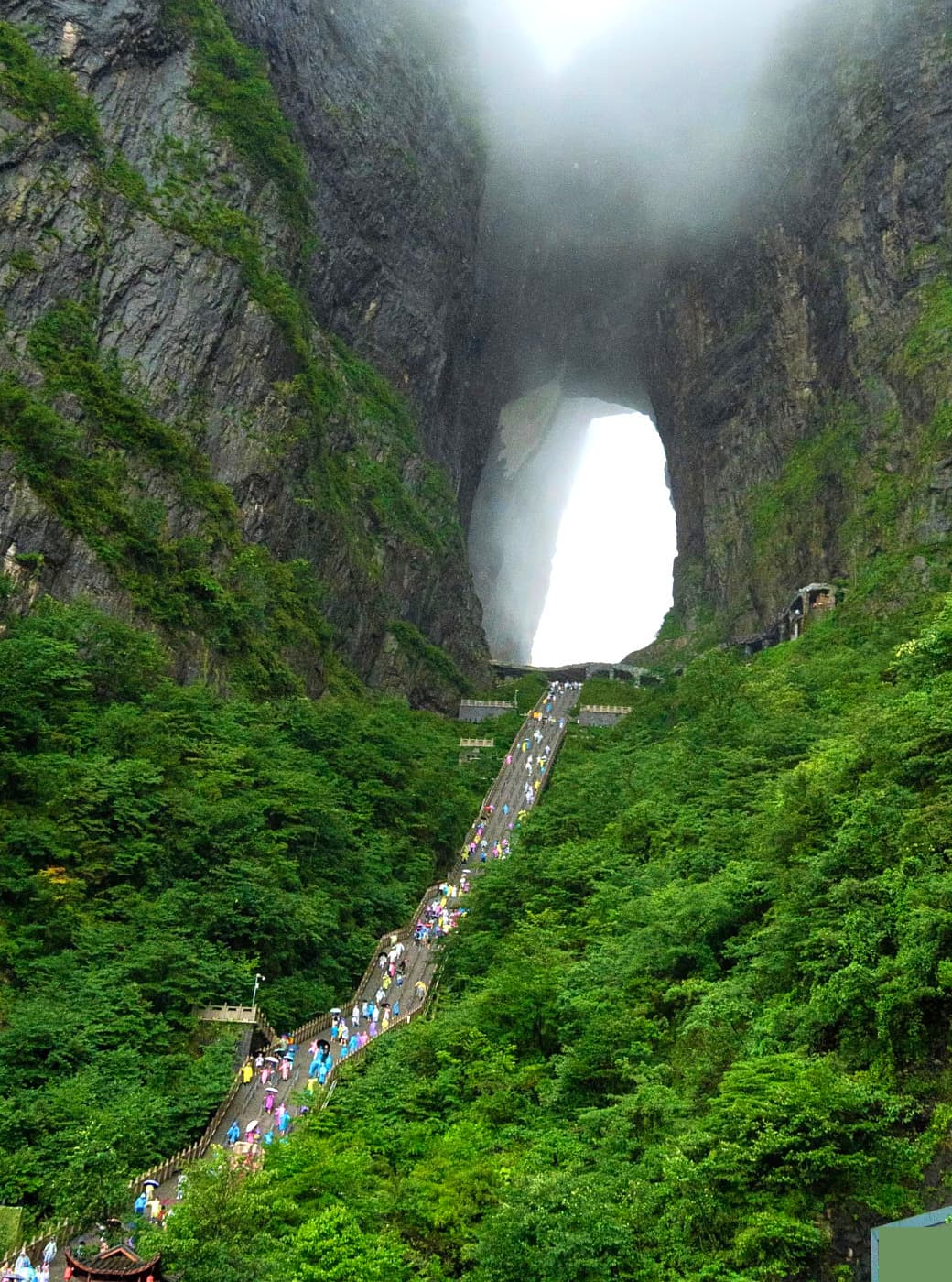
Tianmen Mountain, though technically separate from the national park, adds another dimension. The Tianmen Cave (Heaven's Gate) is a natural arch punched through the mountain at 1,519 meters elevation. The 999-step staircase leading up to it, with mist swirling through the opening, is genuinely awe-inspiring regardless of whether you care about movie references.
Best Photo Spots (That Actually Deliver)
Not every viewpoint in Zhangjiajie lives up to the marketing photos. Here are the spots that consistently deliver spectacular results, and a few that disappoint.
Must-photograph spots: The Avatar Hallelujah Mountain pillar in Yuanjiajie. Shoot it with fog if possible -- early morning or after rain gives the best conditions. The First Bridge Under Heaven, a natural stone arch connecting two pillars with a terrifying drop below. Mihun Tai (Enchanting Terrace) viewpoint, where you look across the entire pillar forest. This is the wide-angle panorama shot. Tianmen Cave from the bottom of the 999 steps, looking up through the natural arch with mist pouring through. The Bailong Elevator from the outside, seen from the valley floor -- a 326-meter glass elevator bolted to the cliff face.
Overrated spots: The glass bridge at the Grand Canyon looks impressive in photos but is hard to photograph well in person due to crowds and reflections. The Tianmen Mountain glass skywalk is thrilling to walk but produces mediocre photos. Helong Park on Tianzi Mountain has great views but faces east, so afternoon light is harsh.
Photo tips: Bring a wide-angle lens or use your phone's ultra-wide mode. Zhangjiajie's scale demands it. Shoot during the golden hour (6-8am and 5-7pm) for dramatic light on the pillars. After rain is the absolute best time -- clouds settling into the valleys create the "floating mountains" effect. A polarizing filter (or your phone's HDR mode) helps manage the bright sky against dark rock faces.
The Best Season to Visit (And the Worst)
Zhangjiajie's appearance changes dramatically with the seasons, and picking the right time is the single biggest factor in whether you get Avatar-like photos or a hazy, crowded experience.
Best: September to November. Autumn brings clear skies, comfortable temperatures (15-25C), and the occasional misty morning without the suffocating summer humidity. October has autumn colors on the pillar vegetation. The crowds thin after Golden Week (October 1-7). Late October through November is the sweet spot.
Good: April to June. Spring is lush and green with frequent mist, which creates the best floating-pillar conditions. Temperatures are mild. The downside is more rain -- bring waterproof everything. May can be crowded around Labor Day (May 1-5).
Crowded but dramatic: July to August. Peak summer brings the heaviest tourist crowds and the most intense heat and humidity. However, summer thunderstorms create spectacular cloud formations. If you can tolerate the crowds, post-storm golden hour is photography nirvana.
Underrated: December to February. Winter in Zhangjiajie means snow on the pillars, which is stunningly beautiful. Crowds are minimal. But some trails close during icy conditions, cable cars may shut down for weather, and temperatures drop to 0-5C at the summit. Come prepared with warm layers and accept that some attractions may be unavailable.
Worst timing: Chinese Golden Week (October 1-7), Spring Festival (late January or February), and Labor Day (May 1-5). The park is capacity-limited during these periods, and queues for elevators and cable cars can exceed 2 hours.
Common Disappointments (And How to Avoid Them)
Haze and smog. Zhangjiajie is in Hunan province, which is inland and can have air quality issues. Heavy haze washes out the views and kills the depth that makes the pillar forest so impressive. Check the air quality index (AQI) before your trip. AQI under 50 means clear views. Over 100 means disappointment. The AQI section in Amap or the standard weather app shows this.
Crowds at the Bailong Elevator. This is the single worst bottleneck in the park. The elevator only holds about 50 people per trip, and in peak season the queue can stretch to 90+ minutes. Arrive before 8am or skip it entirely -- you can reach Yuanjiajie via the Tianzi Mountain cable car plus shuttle bus instead, which is scenic and rarely crowded.
Expecting a pristine wilderness. Zhangjiajie is a managed tourism site, not a backcountry experience. Paths are paved. There are handrails everywhere. Loudspeakers announce safety messages. Vendors sell corn on the cob at viewpoints. If you want wild, ungroomed nature, hike the Golden Whip Stream at dawn when nobody is around.
Underestimating the physical effort. Tianmen Mountain's 999 steps are steep and exposed. The national park involves significant walking -- 15,000-25,000 steps per day is normal. The elevation changes between valley floor and plateau top are substantial. Bring comfortable shoes and pace yourself.
The Verdict: Is It Worth the Trip?
Yes. Unequivocally yes.
Zhangjiajie is not a quiet wilderness escape. It is not the empty floating-mountain paradise that social media suggests. It is a heavily visited, well-managed, spectacular Chinese national park that delivers genuinely jaw-dropping scenery if you time your visit right.
The Avatar connection is marketing, but the underlying geology is extraordinary. There is nowhere else on Earth where thousands of sandstone pillars rise from subtropical forest like a stone city of impossibly thin towers. The scale, the mist effects, the sheer verticality of the landscape -- these things are real and they hit harder in person than in any photo or film.
The key to a great Zhangjiajie experience: visit outside major holidays, start your days early, check the weather forecast and AQI, and spend at least 3 days so you can wait for the right conditions. One misty morning on the Yuanjiajie plateau is worth the entire trip.
Zhangjiajie rewards patience and timing. Rush through it on a one-day tour and you will wonder what the fuss is about. Give it time and attention and it will show you something you have never seen before.