Why Zhangjiajie Should Be on Your China Itinerary
Zhangjiajie is the place in China that makes people stop scrolling and say "wait, that's real?" Towering sandstone pillars wrapped in mist, glass bridges suspended over thousand-meter drops, and ancient caves carved into cliffsides. It became globally famous when James Cameron cited it as inspiration for the floating Hallelujah Mountains in Avatar, and it has only gotten more popular since.
But here is what the viral TikToks do not show: Zhangjiajie is a surprisingly complex destination to navigate. The national forest park alone covers 480 square kilometers. There are multiple scenic areas with separate ticket systems, a confusing internal transport network of buses, cable cars, and elevators, and limited English signage once you leave the main tourist arteries.
This guide gives you a practical, day-by-day plan to see the best of Zhangjiajie without wasting time on logistics. Whether you are coming from Shanghai, Beijing, or anywhere else in China, this is everything you need to know before you go.
Getting to Zhangjiajie
Zhangjiajie has its own airport: Zhangjiajie Hehua Airport (DYG). Direct flights connect it to Beijing (3 hours), Shanghai (2.5 hours), Guangzhou (1.5 hours), Chengdu (1.5 hours), and a dozen other Chinese cities. Flights are cheap if booked 1-2 weeks ahead -- expect 400-900 CNY ($55-125) one way from most major cities. Book on Trip.com, Qunar, or the airline apps.
The airport is 10 km from Zhangjiajie city center. A DiDi ride to downtown or to Wulingyuan (the town near the national park entrance) costs 30-80 CNY depending on your destination. Airport buses run to the city center for 10 CNY.
By train: Zhangjiajie has a regular rail station with connections to Changsha (5-6 hours), Jishou, and other Hunan cities. There is no direct high-speed rail yet, though a line is under construction. From Changsha, the fastest route is the Changsha-Zhangjiajie highway bus (4 hours, around 130 CNY).
Most travelers fly in and fly out. If you are already in Hunan province, the bus from Changsha is a solid budget option.
Where to Stay: Zhangjiajie City vs Wulingyuan
This is the first decision you need to make and it matters. There are two main areas to base yourself:
Zhangjiajie City (also called Yongding) is the larger urban area. It is where the airport and train station are, and where you will find Tianmen Mountain (a separate attraction from the national park). Hotels here range from budget hostels at 80-150 CNY per night to nice mid-range hotels at 200-500 CNY. The city has restaurants, convenience stores, and a more local feel.
Wulingyuan is a small tourist town right outside the national forest park entrance. If the park is your main destination, staying here saves you a 40-minute commute each morning. Hotels cluster around the park gates, especially near the Biaozhi Men (Landmark Gate) entrance. Prices are similar to Zhangjiajie City but tourist-oriented.
The best strategy: spend your first and last nights in Zhangjiajie City (for Tianmen Mountain and airport access), and your middle nights in Wulingyuan (for the national park). Book on Trip.com or Meituan -- both show English listings.
Day 1: Tianmen Mountain and the Glass Skywalk
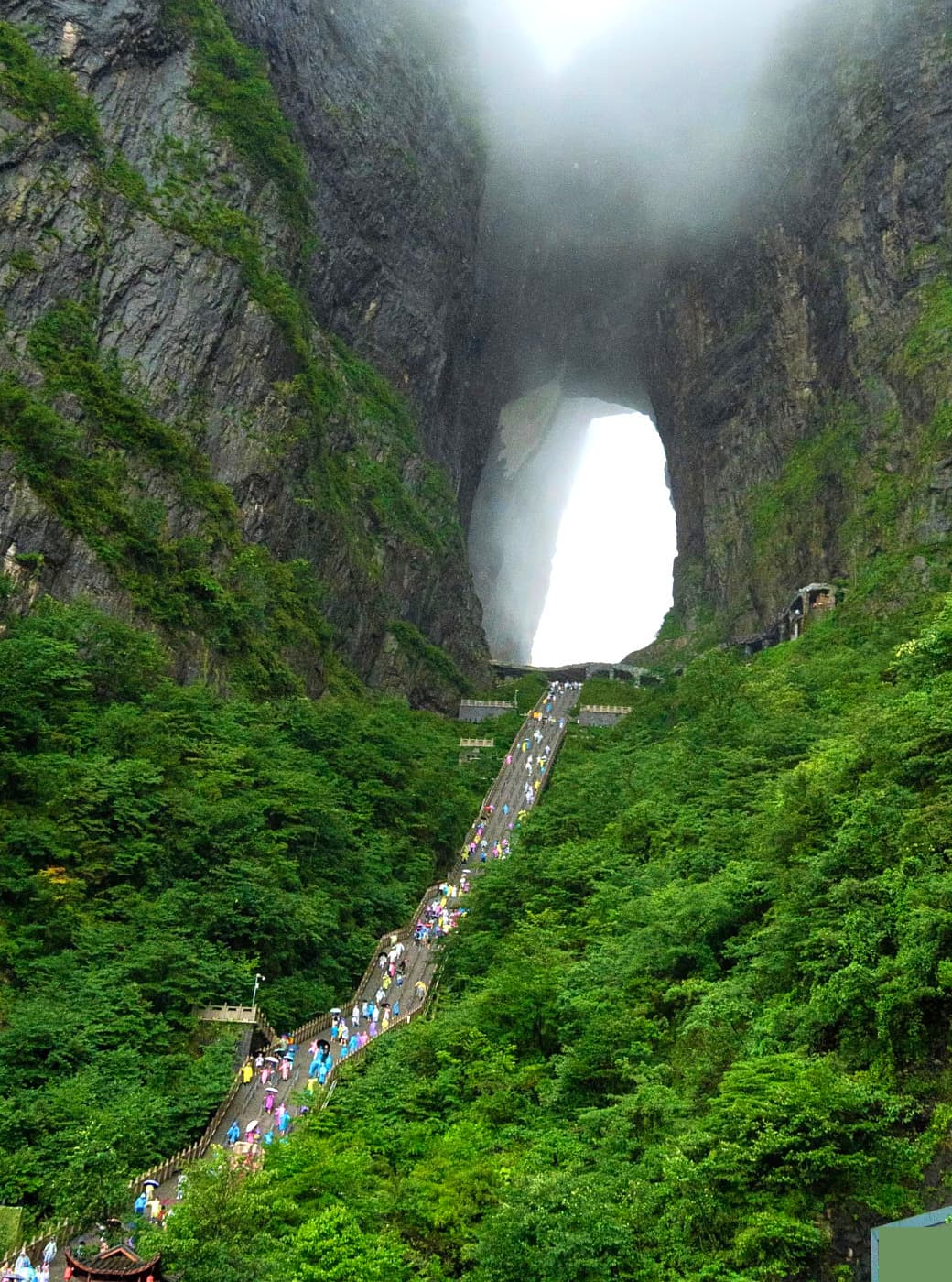
Start with Tianmen Mountain, located right in Zhangjiajie City. This is the mountain with the famous natural arch -- Tianmen Cave (Heaven's Gate) -- and the terrifying glass skywalk bolted to the cliffside.
Tickets cost 278 CNY ($39) and include the cable car ride up, shuttle bus, and access to all attractions on the mountain. Buy tickets on the official WeChat mini-program or through Trip.com at least one day ahead -- same-day tickets sell out during peak season.
The cable car from the city center to the mountaintop is 7.5 km long, one of the world's longest. The ride takes about 30 minutes and offers jaw-dropping views as you ascend through clouds. At the top, walk the cliff-hugging paths and the glass skywalk (a transparent walkway bolted to the side of the mountain -- shoe covers provided, extra 5 CNY).
To reach Tianmen Cave, take the mountain shuttle bus down 99 switchbacks (the famous Tongtian Avenue road) and then climb the 999 steps to the cave entrance. The steps are steep but the view from the top is iconic. Budget 4-5 hours for the full Tianmen Mountain experience.
Pro tip: go early. The cable car queue gets brutal after 10am. Aim to be at the cable car station by 8am.
Day 2-3: Zhangjiajie National Forest Park
The national forest park is the main attraction and needs two full days minimum. Entry costs 225 CNY ($31) for a 4-day pass (valid for multiple entries). The park has four main scenic zones, each with unique landscapes.
Day 2 plan -- Yuanjiajie and the Avatar Pillars: Enter through the Biaozhi Men gate in Wulingyuan. Take the Bailong Elevator (72 CNY, the world's tallest outdoor elevator at 326 meters) up to Yuanjiajie. This is where the Avatar Hallelujah Mountains are. Walk the loop trail past the "Avatar Hallelujah Mountain" pillar (officially renamed), the First Bridge Under Heaven (a natural stone bridge connecting two pillars), and the Mihun Tai viewpoint. Allow 3-4 hours for the full loop. Descend via the Tianzi Mountain cable car (72 CNY) and take the free shuttle bus back to the gate.
Day 3 plan -- Golden Whip Stream and Tianzi Mountain: Start with Golden Whip Stream, a 7.5 km flat trail along a creek at the valley floor with pillar formations towering above. It is the most peaceful part of the park -- do it early before crowds arrive. After the stream walk, take the shuttle to Tianzi Mountain for panoramic views of the entire pillar forest from above. The Helong Park viewpoint is the classic photo spot.
Inside the park, free shuttle buses connect all major zones. Routes are well-signed with numbers. Bus 1 connects the entrances, Bus 2 goes to Yuanjiajie, Bus 3 to Tianzi Mountain. Buses run approximately every 10-15 minutes.
Day 4: Zhangjiajie Grand Canyon and Glass Bridge
If you have a fourth day, the Zhangjiajie Grand Canyon and its famous glass bridge are worth the trip. Located about 40 minutes by bus from Wulingyuan, the canyon offers a different landscape -- waterfalls, underground rivers, and a dramatic gorge walk.
The glass bridge (Zhangjiajie Grand Canyon Glass Bridge) is 430 meters long and 300 meters above the canyon floor. It was the world's longest and highest glass bridge when it opened. Tickets for the canyon plus glass bridge cost about 259 CNY ($36). Book ahead -- the bridge has time-slot entry and slots sell out.
The canyon walk itself takes 2-3 hours downhill (no uphill return -- you exit at the bottom and take a shuttle). It is less crowded than the national park and offers a more intimate nature experience.
If you skip the grand canyon, use this day for a revisit to your favorite national park zone or explore Wulingyuan town, which has a pleasant riverside walk and local food street.
Tickets, Costs, and What to Pack
Here is a quick cost summary for a 4-day Zhangjiajie trip:
Tianmen Mountain: 278 CNY (cable car, skywalk, everything included). National Forest Park: 225 CNY (4-day pass). Bailong Elevator: 72 CNY one way. Tianzi Mountain Cable Car: 72 CNY one way. Grand Canyon + Glass Bridge: 259 CNY. Hotels: 150-400 CNY per night. Food: 50-100 CNY per day. DiDi and local transport: 50-100 CNY per day.
Total budget: roughly 1,500-2,500 CNY ($210-350) for 4 days, not including flights.
What to pack: comfortable hiking shoes with grip (trails can be slippery when wet), a rain jacket or poncho (Zhangjiajie gets frequent mist and rain -- this is actually what makes the scenery so dramatic), layers (the mountaintops are noticeably cooler), sunscreen, a portable charger (you will take hundreds of photos), and snacks for park days (food inside the park is overpriced and mediocre).
Best seasons: April-June and September-November offer the best weather and visibility. July-August is peak tourist season with crowds and heat. Winter (December-February) brings snow, which makes the pillars stunning but some trails may close.