Why You Don't Need a Tour Group for Zhangjiajie
If you search "Zhangjiajie" on any travel forum, half the replies will tell you to book a guided tour. Ignore them. Zhangjiajie is one of the most independent-travel-friendly national parks in China. The shuttle bus system inside the park is free and well-organized. Trails are clearly marked. Ticket booths have English. And skipping the tour group means you move at your own pace, avoid the flag-waving herds, and spend zero yuan on overpriced "included" lunches.
The tour group myth persists because Zhangjiajie used to be hard to navigate. Before the shuttle bus upgrades and app-based ticket systems, dealing with logistics in a rural Chinese town was genuinely difficult without Mandarin. That era is over. With Amap on your phone, DiDi for rides, and Trip.com for tickets, you have everything you need.
This guide is for solo travelers and small groups who want to do Zhangjiajie on their own terms -- cheaper, quieter, and at whatever pace the trail calls for.
Getting Around Without a Tour Bus
Inside the national forest park, free shuttle buses connect all major scenic zones. The system runs from about 7:00am to 6:00pm, with buses every 10-15 minutes on major routes. Bus stops are numbered and signed in Chinese and English. The most important routes: Bus 1 connects the park entrances, Bus 2 runs to Yuanjiajie (Avatar Pillars area), Bus 3 goes to Tianzi Mountain.
Outside the park, DiDi is your best friend. Zhangjiajie is a small city and DiDi coverage is reliable. Airport to city center costs about 30-40 CNY. City to Wulingyuan (park entrance town) costs 60-80 CNY. Wulingyuan to Grand Canyon costs 40-60 CNY. Set your destination in DiDi's app before requesting -- the English interface means drivers see both the Chinese name and the map pin, so language is not an issue.
Local buses run between Zhangjiajie City and Wulingyuan for about 15 CNY, departing from the city bus station every 15-20 minutes. The ride takes 40-50 minutes. For the Grand Canyon, minibuses depart from Wulingyuan bus station.
Renting a car is possible but not recommended. Park roads are winding mountain roads, parking inside the park is not allowed for private vehicles, and DiDi is far cheaper and less stressful.
Beating the Crowds: Timing Is Everything
Zhangjiajie gets absolutely mobbed during Chinese public holidays -- Golden Week (October 1-7), Spring Festival (late January or February), and Labor Day (May 1-5). If you visit during these windows, expect 2-hour queues for the Bailong Elevator and shoulder-to-shoulder trails. Avoid these dates if you can.
Even during regular season, the park has a daily rhythm you can exploit. Most Chinese tour groups arrive between 9-10am and leave by 4pm. They follow a predictable route: Bailong Elevator up, Yuanjiajie loop, Tianzi Mountain cable car down. If you want the trails to yourself, invert this schedule.
The solo traveler hack: enter the park at 7:30am when the gates open. Head straight to Yuanjiajie via the Bailong Elevator -- you will be one of the first up with almost no queue. Walk the Avatar Pillars loop in near-silence. By 10am, the groups start flooding in and you can descend to Golden Whip Stream (which groups skip because it takes too long for their schedule). The stream trail is flat, shaded, and almost empty before noon.
Alternative entry: use the Yangjiajie cable car entrance on the park's west side. It is less popular than the Biaozhi Men entrance and gives access to the Wulong Village area, which has dramatic cliff scenery without the Avatar-branded crowds.
Budget Solo Travel: Cutting Costs Without Cutting Corners
Zhangjiajie is cheap even by Chinese standards. Here is how solo travelers can do it for under 1,000 CNY ($140) for 3 days, excluding flights.
Accommodation: Hostels in Wulingyuan start at 50-80 CNY per night for a dorm bed. Private rooms in budget guesthouses run 100-180 CNY. The area around Biaozhi Men (the main park gate) has the highest concentration of budget options. Book on Meituan or Trip.com.
Food: Eat where the locals eat, not where the tour buses stop. In Wulingyuan, walk one block away from the main tourist strip and prices drop by half. A plate of rice with two dishes (fanchuan) costs 15-25 CNY. Wonton soup is 10 CNY. The night market on Jundiping Road has grilled skewers, stinky tofu, and rice noodles for 10-20 CNY.
Pack lunch for park days. Convenience stores near the park entrance sell instant noodles, bread, snacks, and bottled water at normal prices. Food inside the park costs 2-3x what it costs outside. A thermos of hot water from your hotel is free and useful for instant noodles on the trail.
Ticket savings: Student ID holders get 50% off most tickets (international student cards accepted at some booths). If you are visiting in low season (December-February), some attractions offer discounted tickets. The national park 4-day pass is already good value -- do not buy separate daily tickets.
Skip the glass bridge if budget is tight. At 259 CNY, it is the priciest single attraction and many travelers say the national park itself is more impressive.
Solo Safety and Practical Tips
Zhangjiajie is very safe for solo travelers, including solo female travelers. The park is well-maintained with guardrails on all cliff trails, emergency phones along main paths, and frequent ranger patrols. The biggest actual risk is slipping on wet stone steps -- wear shoes with good grip and take the steep sections slowly.
Phone signal: You will have 4G coverage at most major viewpoints and along the shuttle bus routes. Signal drops in some valley sections like the lower parts of Golden Whip Stream, but you do not need it there -- the trail is linear with no navigation required.
Cash: Bring some. Most ticket booths and park vendors accept WeChat Pay and Alipay, but a few smaller food stalls and the shoe cover rental at Tianmen Mountain still prefer cash. 200-300 CNY in small bills is plenty.
Weather: Check the forecast, but also accept that Zhangjiajie's weather changes fast. Mist rolls in without warning, rain can start and stop in minutes. This is actually a feature, not a bug -- the pillars look most dramatic when clouds weave through them. Bring a packable rain jacket and embrace the atmosphere.
Solo dining: Eating alone in China carries zero stigma. Point at what you want, sit down, eat. Nobody cares. If you want company, hostels in Wulingyuan are sociable and it is easy to find other solo travelers to share a DiDi or hike together.
A 3-Day Solo Itinerary
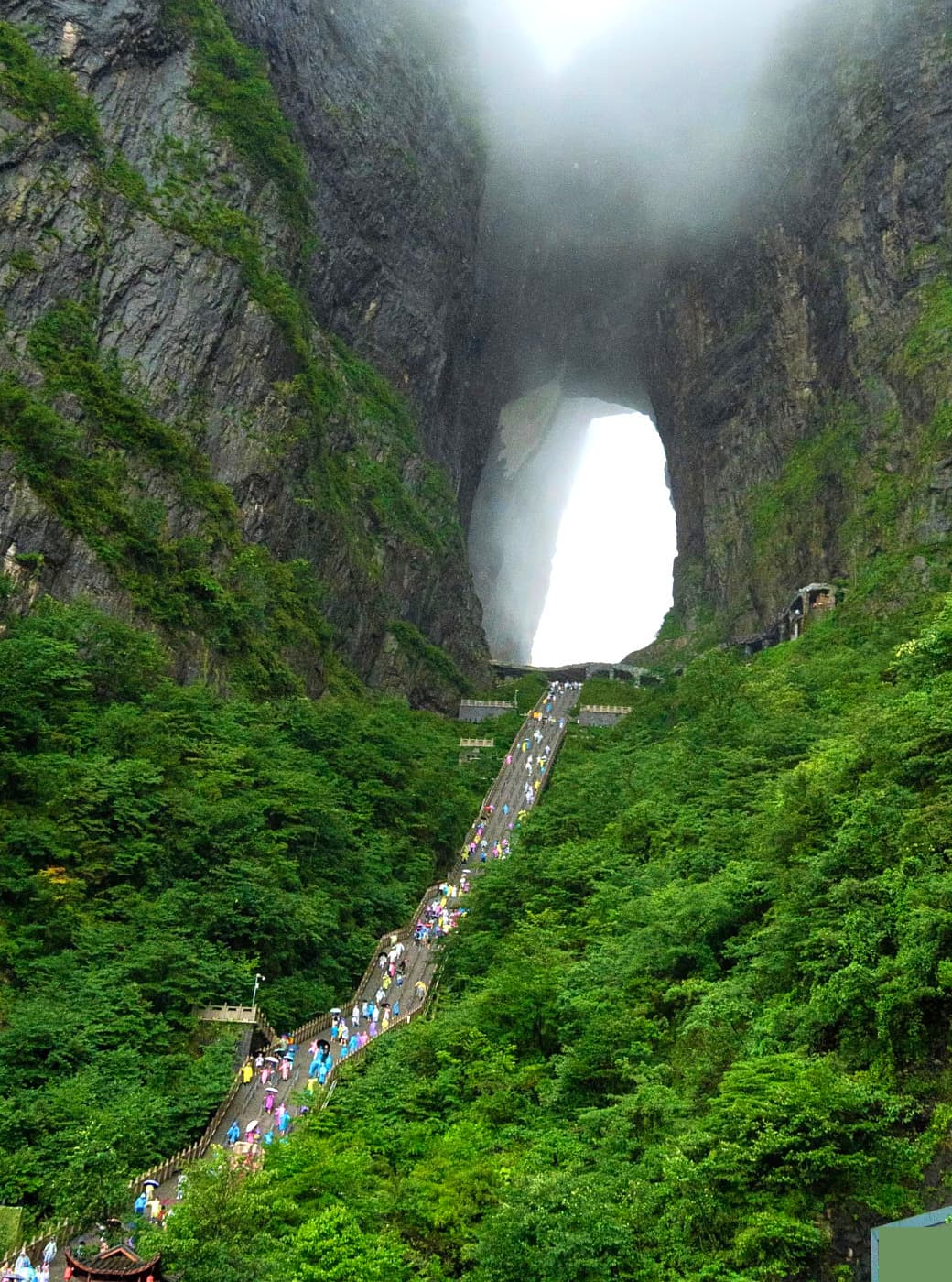
Day 1 -- Arrive and Tianmen Mountain: Fly into Zhangjiajie, check into a hotel in the city center. Head to Tianmen Mountain in the afternoon (less crowded than mornings). Cable car up, walk the glass skywalk, see Tianmen Cave, 999 steps. Dinner in the city -- try the local Hunan-style stir fry (heavy on chili and smoked meat). Stay in Zhangjiajie City.
Day 2 -- National Park, Yuanjiajie: DiDi or bus to Wulingyuan early morning. Enter the park at 7:30am. Bailong Elevator up to Yuanjiajie. Walk the full loop: Avatar Hallelujah Mountain pillar, First Bridge Under Heaven, Mihun Tai viewpoint. After the loop, descend to Golden Whip Stream for the afternoon valley walk. Exit at the Biaozhi Men gate. Check into your Wulingyuan hostel. Evening: night market on Jundiping Road.
Day 3 -- Tianzi Mountain and departure: Re-enter the park early. Take the shuttle to Tianzi Mountain. Walk the Helong Park viewpoint area and the West Sea stone forest. If time allows, explore the less-visited Yangjiajie area. Exit the park by 2-3pm. DiDi back to Zhangjiajie City or directly to the airport for an evening flight.
This itinerary works as a tight 3 days. If you have a fourth day, add the Grand Canyon glass bridge or revisit the national park zones you liked most.